Abstract
As the global demand for nutritious and sustainable food continues to escalate, Pleurotus ostreatus(oyster mushroom), one of the most widely cultivated edible mushrooms globally, is facing increasing demands for high-quality, eco-friendly, and efficient production. Containerized cultivation technology, integrating Controlled Environment Agriculture (CEA) and precision engineering, has emerged as a transformative solution to overcome the limitations of traditional open-field or greenhouse cultivation. This article comprehensively expounds on the structural design, core components, and key environmental control mechanisms of containerized systems for oyster mushroom cultivation. It further analyzes the operational workflow, significant advantages in terms of yield, quality, and sustainability, and discusses the inevitable challenges as well as the long-term development trends. This comprehensive review aims to provide a systematic reference for the industrialization and smart upgrading of the mushroom cultivation industry.
Keywords: Pleurotus ostreatus; Containerized cultivation; Controlled Environment Agriculture (CEA); Environmental control; Sustainable agriculture
1. Introduction
Pleurotus ostreatus, commonly known as the oyster mushroom, is highly favored by consumers worldwide due to its rich nutritional profile, distinct flavor, and extensive medicinal properties. Historically, oyster mushroom cultivation has relied heavily on traditional methods utilizing simple greenhouses, sheds, or open-field facilities[1]. However, these conventional approaches are frequently plagued by uncontrollable meteorological fluctuations, uneven microclimates, vulnerability to pests and pathogens, and low spatial utilization. Consequently, they struggle to meet the growing demands for standardized, year-round, and high-yield production.
In response to these limitations, the agricultural and biotechnology sectors have introduced containerized cultivation technology. By encapsulating the cultivation process within a closed, standardized, and highly automated environment, this innovative approach allows for precise modulation of temperature, humidity, light, and carbon dioxide. This paper delves into the technical architecture and practical applications of containerized technology in oyster mushroom production, highlighting its pivotal role in driving the modernization of the edible mushroom industry.
2. Technical Architecture of Containerized Cultivation System
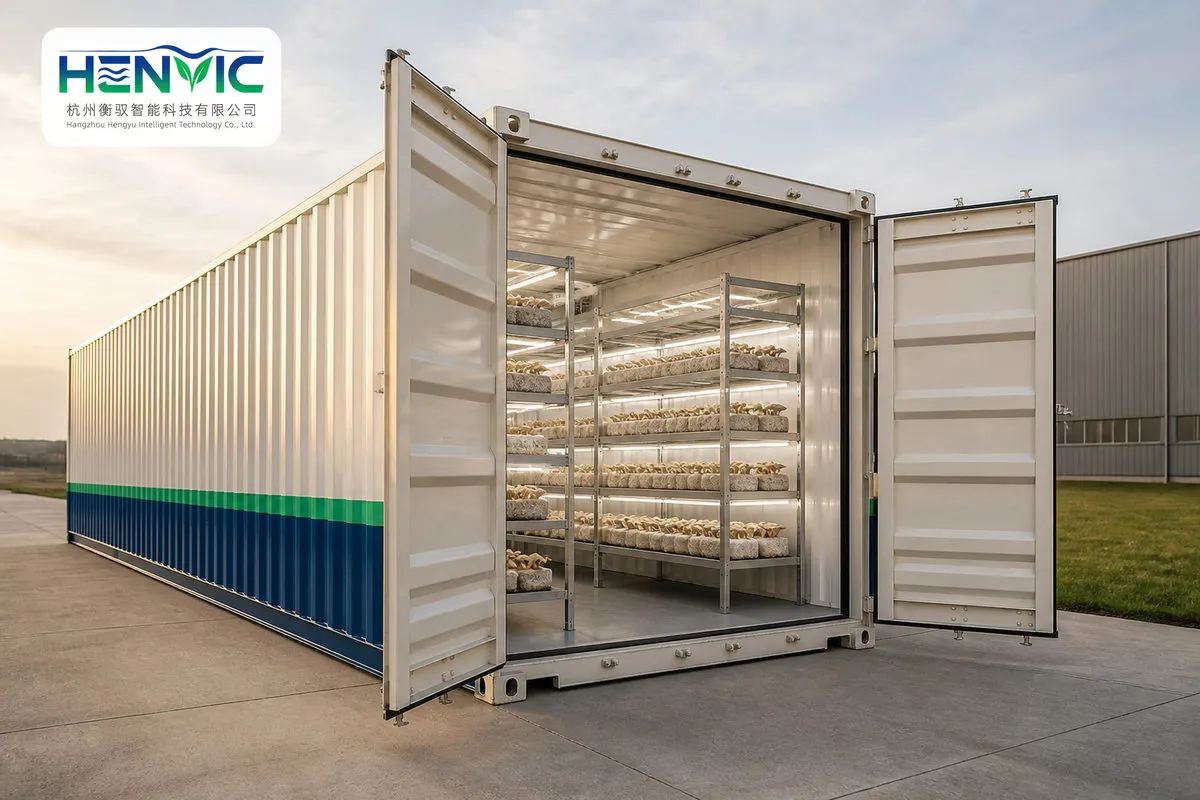
A containerized cultivation system for oyster mushrooms is essentially a miniature, fully enclosed agri-bioreactor. It is designed to replicate and optimize the natural growth conditions required by Pleurotus ostreatus at every stage.
2.1. Standardized Cultivation Containers
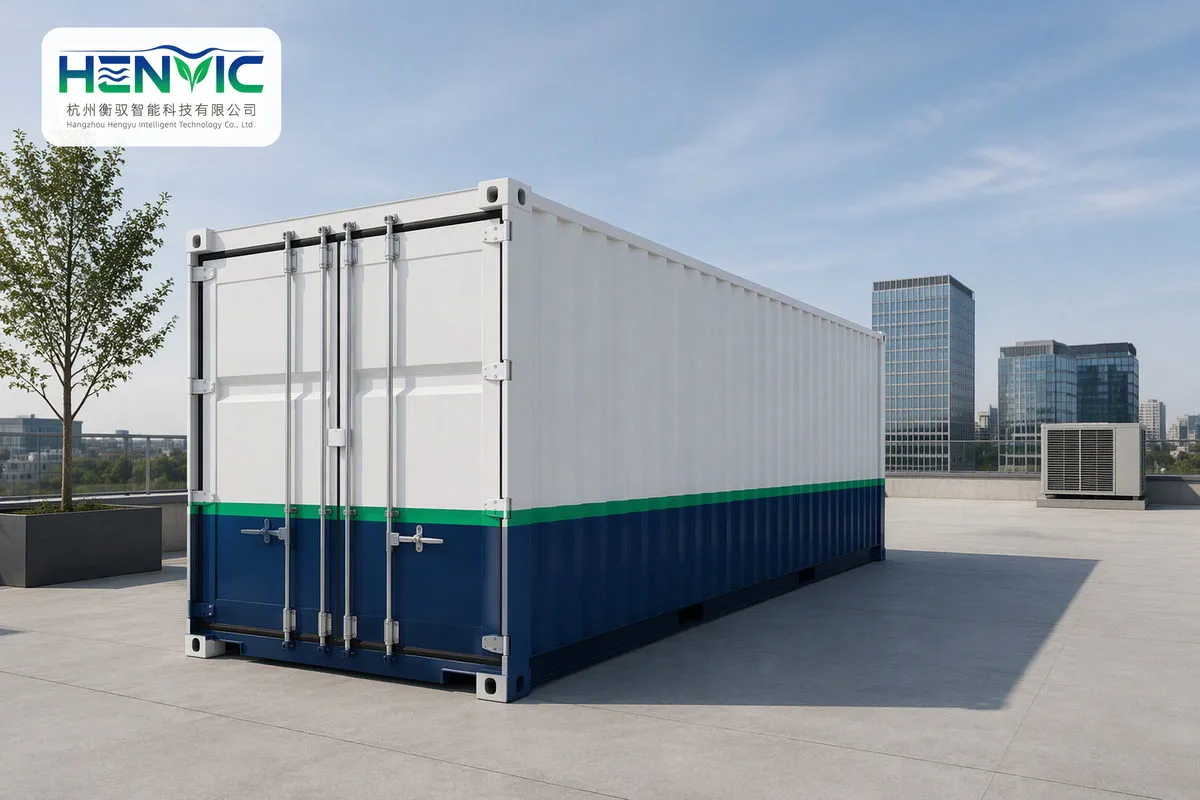
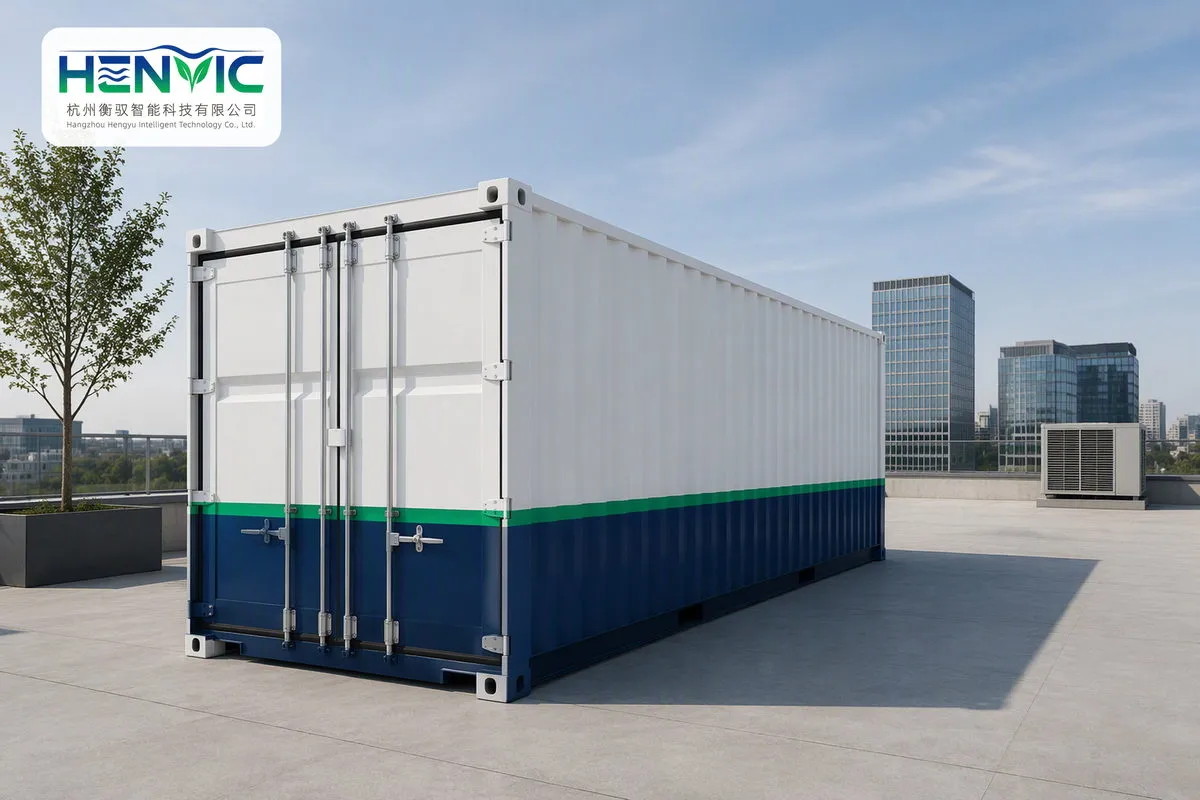
The physical foundation of the system is the container itself. To ensure durability, thermal insulation, and resistance to the high humidity characteristic of mushroom cultivation, these containers are typically constructed from corrosion-resistant materials such as galvanized steel frames, stainless steel interiors, or reinforced polypropylene panels. Standardized modular designs, usually derived from shipping container dimensions, facilitate easy acquisition, stackable layout, logistical transport, and scalable farm expansion[2].
2.2. Integrated Microclimate Control Module
The core value of containerized cultivation lies in its microclimate control system. This module integrates multiple interdependent components:
(1) HVAC Systems: Dedicated refrigeration and heating units regulate the internal temperature, accommodating the specific temperature shifts required from the mycelial inoculation stage to the fruiting body initiation stage.
(2) Humidifiers and Dehumidifiers: These devices maintain precise relative humidity (RH), crucial for mycelial health and preventing the drying out of delicate mushroom caps.
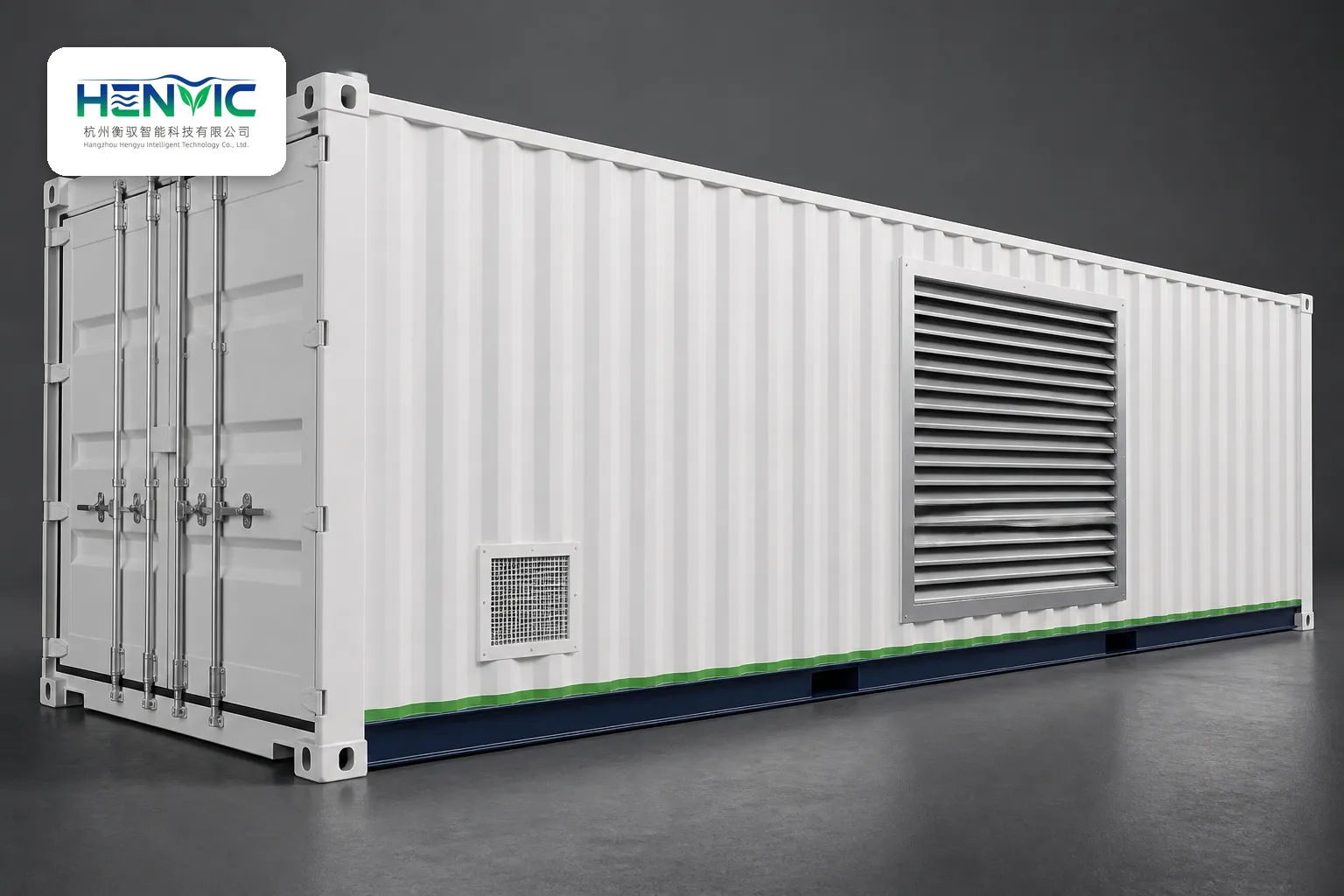
(3) Circulation Fans and HEPA Filtration: Internal fans ensure uniform air distribution, while HEPA filters prevent airborne pathogens and contaminants from entering the isolated environment, eliminating the need for chemical pesticides[3].
2.3. IoT-Enabled Monitoring and Automation
Through a sophisticated network of IoT (Internet of Things) sensors placed within the container, operators can continuously monitor critical parameters such as temperature, humidity, CO2 concentration, and even optical density. A centralized control platform allows for real-time data visualization and automated adjustments of the control modules, maintaining a perfectly matched cultivation curve for each biological stage[4].
3. Key Environmental Control Strategies for Oyster Mushrooms
Pleurotus ostreatus exhibits strong adaptability, yet maximizing its biological efficiency and commercial quality demands strict environmental modulation within the container.
3.1. Temperature Dynamics
Temperature is the primary regulator for mycelial growth and fruiting. During the colonization phase, the mycelium thrives at optimal temperatures (typically 20–25°C). Once fully colonized, the containers are programmed to undergo a deliberate temperature drop (shock), usually down to 10–15°C. This thermal shift is a vital biological trigger for primordia formation. The closed-loop nature of the container ensures this temperature differential is maintained without interference from ambient weather[5].
3.2. Humidity and Moisture Management
While oyster mushrooms tolerate a range of humidity levels, optimal fruiting requires a staging of humidity. High humidity (85–95%) is crucial during primordia formation to facilitate moisture absorption. However, excessive humidity during maturity can trigger bacterial soft rot and slime formation. The container's automated dehumidification function allows for precise moisture management, ensuring a clean, dry, and visually appealing harvest.
3.3. Light and Photoperiod Control
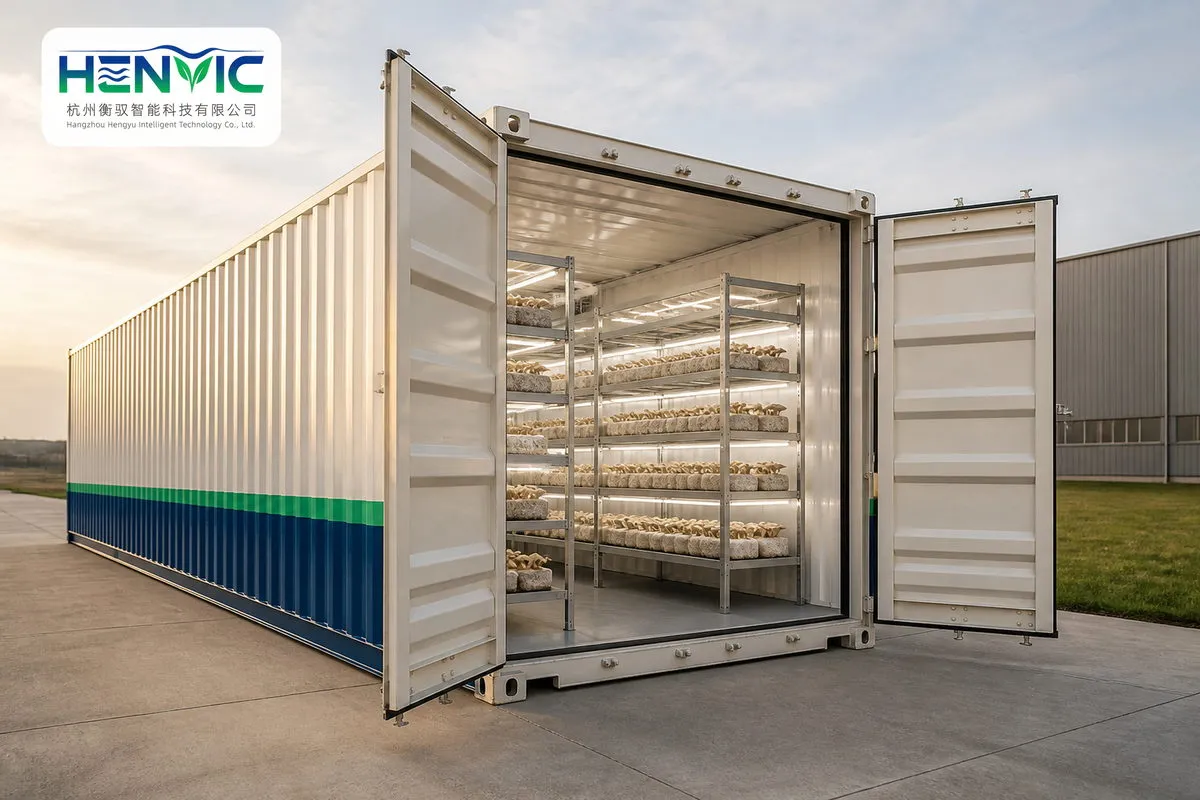
Though oyster mushrooms are not photosynthetic organisms, light plays a critical morphological role. Specific light qualities (e.g., blue and white light spectrums) and short photoperiods are required to induce normal cap differentiation and suppress elongated, deformed stalks. Customized LED lighting arrays integrated into the container provide targeted illumination schedules, replacing unpredictable natural sunlight and creating a consistent 'day/night' cycle that enhances overall crop uniformity.
3.4. Ventilation and Carbon Dioxide Management
High CO2 levels during the fruiting stage lead to stipe elongation, reduced cap size, and severe color fading in oyster mushrooms. The containerized system uses draft-free, filtered air circulation to continuously remove exhaled CO2 and introduce oxygen. This precise ventilation is fundamentally unattainable in traditional open sheds, directly resulting in a higher market grade and better post-harvest shelf life.
4. Workflow and Management Protocols
The application of containerized technology standardizes the entire cultivation workflow, minimizing human error and optimizing resource allocation.
The process typically comprises four phases: substrate preparation and sterilization, aseptic inoculation, mycelial incubation inside the climate-controlled container, and managed fruiting and harvesting. Because the internal environment is clean and stable, substrates can be formulated using diverse agricultural residues, such as cottonseed hulls, sawdust, and corn stalks, to create a nutritious substrate. Automated or semi-automated harvesting mechanisms deployed in large-scale container farms can significantly reduce labor costs while ensuring minimal physical damage to the mushrooms[6].
5. Advantages and Industry Impact
The transition from open-air farming to containerized cultivation brings substantial advantages that have profound implications for the industry.
5.1. Year-Round, Non-stop Production
Insulated from seasonal extremes, snowstorms, or unseasonal heatwaves, the container farm operates on its own timeline. This guarantees a continuous supply of fresh produce to the market, drastically increasing facility utilization and annual yield.
5.2. Superior Quality and Food Safety
The isolated, sanitized environment eliminates the invasion of common mushroom pests (such as sciarid flies and mites) and airborne diseases. Moreover, the precise substrate formulations entirely avoid heavy metal accumulation and pesticide residues, yielding a product that meets the highest food safety standards.
5.3. High Space Efficiency and Sustainable Recycling
Vertical stacking of containers combined with high-density internal racking maximizes spatial output. Furthermore, the containerized system can utilize local agricultural waste as substrate materials, turning waste into value. The spent substrate can also be easily collected from containers for vermicomposting or biofuel generation, fostering a circular agricultural economy.
6. Challenges and Future Prospects
Despite its undeniable superiorities, containerized cultivation faces inevitable hurdles. The high initial capital expenditure for high-tech containers and the sustained energy demands of continuous HVAC and lighting operations constitute the primary barriers to widespread adoption, particularly in developing agricultural regions.
Looking forward, technological synergy is expected to dismantle these barriers. The integration of renewable energy, such as solar panels coupled with energy-efficient refrigeration, will significantly lower the carbon footprint and running costs. Meanwhile, advanced AI algorithms will analyze vast historical data to generate self-optimizing cultivation parameters, transforming the containerized system into a true "smart automated bioreactor." Embracing this technology is not just an operational upgrade; it is a necessary evolution toward sustainable, precise, and profitable mushroom cultivation.
7. Conclusion
Containerized technology provides Pleurotus ostreatus cultivation with a comprehensive, controllable, and resilient production platform. By mastering precise environmental management within the container—manipulating temperature variation, humidity staging, light quality, and CO2 levels—growers can achieve unprecedented improvements in product quality, safety, and operational efficiency. As the synergy between smart engineering, IoT, and biotechnology deepens, containerized cultivation will inevitably become the cornerstone of the future global edible mushroom industry, driving a sustainable agricultural revolution.